
Fayette County Criminal Records
Criminal records in Fayette County are kept at the Circuit Clerk's office in Vandalia. This south-central Illinois county has a population just over 21,000 and falls within the 4th Judicial Circuit. Vandalia, the county seat, once served as the state capital. Court records from criminal cases filed here are available through the Judici online portal or by visiting the courthouse in person. Whether you need to check on a case, get copies of filings, or understand how public access works in Fayette County, the information below lays it all out.
Fayette County Criminal Records Quick Facts
Fayette County Circuit Clerk
The Fayette County Circuit Clerk is the keeper of all court files. The office sits in the Fayette County Courthouse in Vandalia. Criminal cases, traffic matters, civil lawsuits, and family law filings all go through this office. If you want copies of a criminal record, this is where you start. Bring an ID and a case number if you have one. Staff can search by name too. Copies are charged at the standard per-page rate. Certified copies cost more but carry the official seal.
Fayette County is a smaller county with a moderate case load. Most criminal filings come from the Vandalia area. The 4th Judicial Circuit covers Fayette County along with several neighboring counties. Judges in this circuit rotate between locations. Court records stay local with the Fayette County clerk no matter which judge handled the case. The clerk's office is open on regular business days.
The Uniform Conviction Information Act (20 ILCS 2635) makes conviction records public throughout Illinois. Anyone can ask the Fayette County clerk for conviction information. No reason is needed. The law has been on the books since 1991.
Search Fayette County Records Online
Fayette County uses the Judici system for online court records. It is free. You do not need an account. Just go to Judici, pick Fayette County from the dropdown, and type in a name or case number. Criminal cases show the charges, key court dates, and case status. Traffic and civil cases are also covered. The data goes back a good number of years.
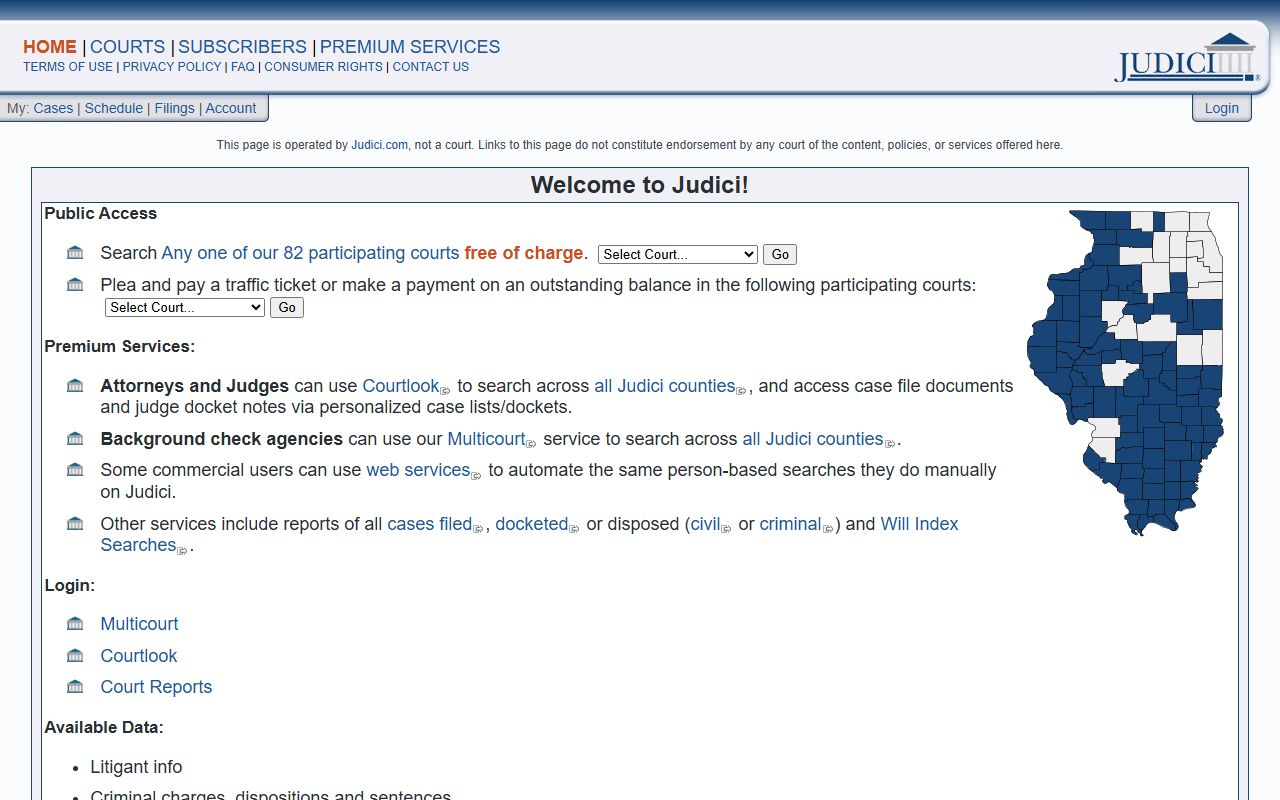
Judici gives you the case summary. It does not give you the full court file. Police reports, witness statements, and filed motions are not on there. For those documents, you need the clerk's office. But Judici is the best free starting point when you want to check if a criminal case exists in Fayette County. Active cases tend to have the most current data since the clerk updates entries as things happen.
The re:SearchIL portal offers another online option. This state system gives access to court documents through eFiling. Public users pay $0.10 per page, capped at $3 per document. It can fill in some of the gaps Judici leaves. Sealed and expunged records do not show on either tool.
Fayette County State Criminal Records
The Illinois State Police Bureau of Identification holds criminal history data from all 102 counties. Fayette County is in that system. When someone gets arrested here, the data goes to the Bureau. You can run a name-based check for $10 or go with a fingerprint-based check for $15 to $20. A combined state and FBI check runs $27 to $32.
The CHIRP system is good for a quick online conviction check. It costs $10. You need an Illinois driver's license or state ID to register. CHIRP only returns convictions. Pending cases and arrests that did not lead to a conviction will not show. Judici shows court case data from the local clerk. CHIRP shows conviction data reported to the state police. Running both gives a broader view.
The Criminal Identification Act (20 ILCS 2630) governs how the state stores and shares criminal records. It controls who sees what. Law enforcement gets wider access. The public can see convictions but not all arrest data.
Expungement in Fayette County
Certain Fayette County criminal records can be expunged or sealed. Expungement erases the record. Sealing hides it from the public but law enforcement can still see it. Arrests that did not end in a conviction are the most common type eligible for expungement. Some probation and supervision cases also qualify after a waiting period.
To start, you file a petition with the 4th Judicial Circuit Court. The court order fee is $60. Waiting periods depend on the case. The Office of the State Appellate Defender has free forms and guides. Their site walks through each step. Once the judge signs the order, the Fayette County Clerk and the Illinois State Police update their records. The case drops out of public searches on Judici and CHIRP.
Some offenses cannot be sealed or expunged under Illinois law. Check the State Appellate Defender site or ask a lawyer about your case.
Get Copies of Fayette County Records
Visit the clerk's office in Vandalia for the fastest copies. Bring your ID and the case number. Staff print copies while you wait. The Illinois Freedom of Information Act (5 ILCS 140) also lets you request records from local agencies. You can send a FOIA request to the Fayette County Sheriff or any police department in the county. They must respond in five business days.
For a quick check, use Judici at no cost. For official copies, the clerk in Vandalia handles it. State conviction checks through CHIRP cost $10. Mail requests are another option. Send the name, case number, and payment to the Fayette County Circuit Clerk. Most mail requests take a week or two to process.
- In-person requests at the clerk's office in Vandalia
- Free online lookup on Judici.com
- Mail requests with payment to the Circuit Clerk
- CHIRP statewide conviction check for $10
- FOIA requests for police and sheriff records
Nearby Counties for Criminal Records
Fayette County is in south-central Illinois. If a case was filed in a nearby county, contact that county's circuit clerk. Several neighboring counties share the same judicial circuit.